Hulitun tst tu qa’ (Water is Life)
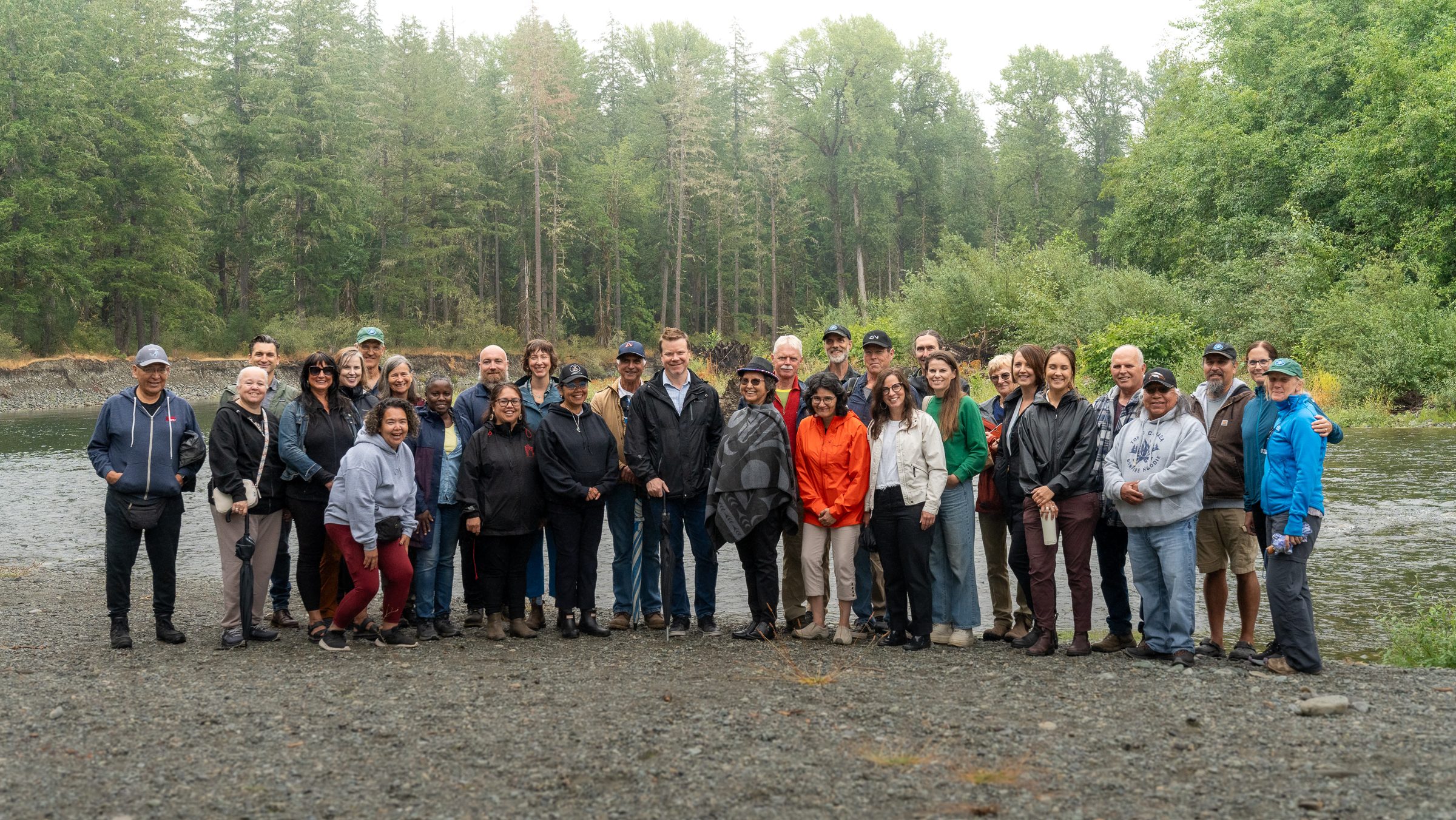
Stoltz pool. July 2024. Photo by G.Twomey
In Quw’utsun (Cowichan) culture, the teaching Hulitun tst tu qa’ (Water is Life) reflects a deep understanding and appreciation of the importance of water, and watersheds, to the survival of all beings. Here, in the coastal rainforests of the Cowichan Valley, we all rely on fresh clean water to make its way from mountain top to estuary, creating creeks, streams, marshes, lakes and rivers that are home to many species, including wild pacific salmon. As our Chief Medical Health Officer says, “our ecosystem is our health system”, and water is what keeps us going.

Lake Cowichan, World Water Day, March 22, 2024.
“The well-being of our territory and our people, our Quw’utsun Mustimuhw, is inseparable from the well-being of the Quw’utsun Stal’o’. For us, every day is Water Day. – Chief Cindy Daniels
“Only emergency measures and giant pumps were able to keep the river flowing during the (dry) season. Replacing the Cowichan weir will allow more water to be captured, stored and used when needed. This will keep the river healthy, the fish swimming and better support the people of Cowichan during severe drought.” – Premier David Eby
Meet the Iconic Cowichan Watershed
The Quw’utsun Sta’lo’/Cowichan River is recognized as a Heritage River by both the Canadian and British Columbian governments. Its watershed, which also includes the Xwulqw’selu/Koksilah River, is at the center of the territory of BC’s largest First Nation by population. Quw’utsun people have lived in a reciprocal relationship with the river since time immemorial and continue to today. Fishing, food gathering, spiritual wellbeing, shelter, medicine and other practices all need water. A healthy Cowichan River is vitally important for the entire Cowichan Region.
- The river provides spawning and rearing habitats for a diversity of salmon and trout species that are integral to the whole ecosystem including Chinook, Coho, Chum, and Pink salmon, and Steelhead, Brown, and Dolly Varden trout. In turn, these fish feed countless other species, from trees and butterflies to salamanders to bears! Salmon are also important for the ocean’s food web, including Orca whales.
- Recreation improves quality of life for both residents and tourists, including fishing, hiking, white-water paddling, nature-watching, swimming, and other outdoor activities.
- Cowichan lake and river provide water for homes, agriculture, and industry, including the Town of Lake Cowichan. An underground water supply, the Cowichan River aquifer, provides some of the best drinking water in Canada, and serves Duncan, North Cowichan and parts of the Regional District.
- Cowichan River flows also support hundreds of union jobs at Domtar’s Crofton mill, and water supply for the town of Crofton.
However, climate change has brought hotter, drier, and longer summers, challenging the river’s health. When water flows are low, the river becomes too shallow and warm, leading to unsafe water quality, fish die-offs, as well as impacting mill workers, recreation, and drinking water supplies.
What’s the problem?

Snowmelt and rain used to naturally refill Cowichan Lake fairly reliably throughout the spring and summer. This kept the river flowing strong, meeting the needs of fish, communities, and industry. In 1957, a weir was built, where Cowichan Lake empties into the Cowichan River, to help control the outflow from the lake and sustain consistent flows. The weir was built by the Crofton mill, who is still the weir owner and operator today (now Domtar/Catalyst), under a Provincial water license. That license requires the weir operator to manage water storage and flows to sustain minimum flow rates in the river according to seasonal schedules. The flow rates are determined based on ecological requirements for fish and other species, and tracked with Water Survey of Canada gauges.
For the first fifty years, the weir worked well to keep river flows at the required flow schedule, but for the past twenty years, this has often been impossible. The amount of water that can be stored by the weir isn’t sufficient to last until the fall rains return. A higher weir is now needed to offset the impacts of climate change if healthy flows are to be maintained.

What if we do nothing?

- In 2023, poor water quality in the Cowichan River caused a huge fish die-off, partly due to the water being too low and too hot. At least 84,000 juvenile steelhead trout died along with thousands of other fish, estimated at over 100,000 in all.
- Twice now, pumps have been needed to draw down Cowichan Lake to keep the River flowing. The local Medical Health Officer equated this situation to the River being ‘on life support’, like a patient needing machines to stay alive. (In 2019, pumps were needed for 21 days, and in 2023, they were needed for 36 days.)
- Drinking water supplies can be affected.
- Low flows threaten 300 union jobs at the Crofton mill, which faces summer shut-downs when water levels are too low in the lower river (Duncan) to meet the mill’s licensed water needs.
- River-based recreation, culture, and tourism, like fishing, swimming, paddling, and nature watching, can be affected by shallow and unsafe water.
- There is a fish that lives in the shallow shoreline areas around Cowichan and Mesachie Lakes, and nowhere else on earth! The Cowichan Lake Lamprey is one of an ancient group of fish which evolved about 360 million years ago, millions of years before dinosaurs roamed the earth. When the lake is low, particularly when pumps are drawing water from it, the lamprey’s habitat can be exposed.
Luckily, we can do something about this by raising the height of the weir. See How the Weir Helps.
