Have a question? Enter it at the bottom of this page in the comments area.
We will answer questions during the live presentation on December 10, 2020.
The preliminary design is based on recommendations from the 2018 Cowichan Water Use Plan (WUP), stakeholder engagement, Provincial and Federal legislation and industry accepted practices. Fish passage and riparian environment objectives are the priority in the design and the basis for the project funding.
This project is managed by the CVRD and is made possible through the generous support of the British Columbia Salmon Restoration and Innovation Fund (BCSRIF).
More information will be posted in the following days.
Please join us for a live presentation on December 10, 2020.
Presentation: 6 to 7 PM
Q&A: 7 to 8 PM
Online public link:
https://cowichanvalleyrd.webex.com/cowichanvalleyrd/onstage/g.php?MTID=ef3b29b2c638a185fa0773f84c5c7ebaf
Call-in number: 1-844-992-4726
Call-in access code: 146 385 7474


Have a question? Enter it at the bottom of this page in the comments area. We will answer questions during the live presentation on December 10, 2020.
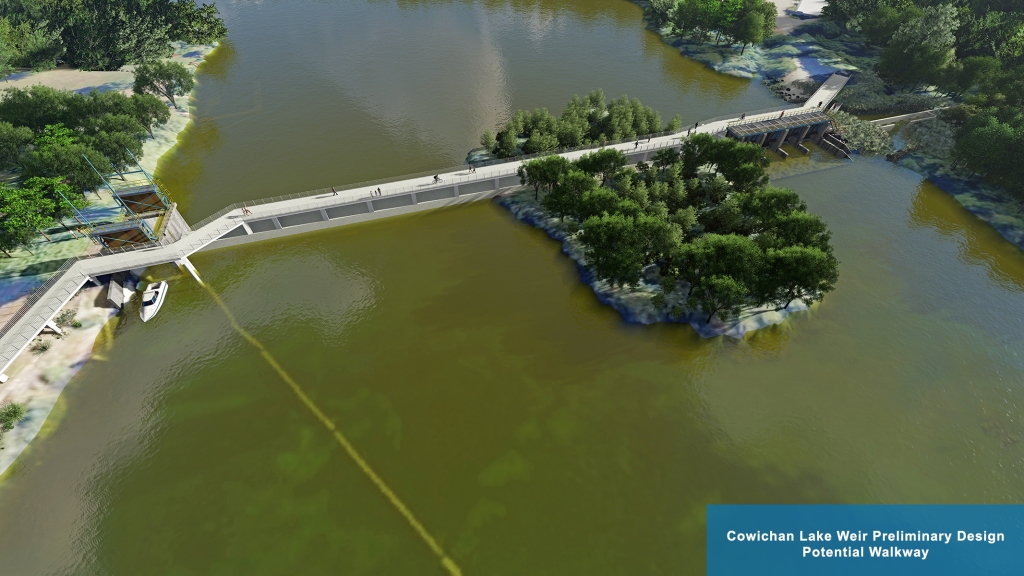
We are currently exploring the option of a walkway over the weir. Further analysis is required to determine the feasibility of this option.


We are designing a walkway into the project as an option. Ultimately it will be up to the new owner/water license owner to decide whether or not to include one.
Great idea. We are designing a walkway into the project as an option. Ultimately it will be up to the new owner/water license owner to decide whether or not to include one.
The plan is to include enough cold water from the deeper section of the lake to lower the temperature to just below lethal temperature. Of course there are many variables but early indications suggest we can help the situation out with a cold water system for the month or two where temperatures are near lethal for juvenile fish. The release of cold water should also attract fish into the fish passage system to access the lake.
An inflatable bladder structure on top of the weir is not deemed necessary and is no longer part of the design.
Modelling of lake levels have not yet been completed. A new weir would reduce the probability that very low lake levels would occur but ultimately extreme climate events will dictate when that happens.
Information and signage have been discussed but have not been designed at this stage in the process.
Yes, as the water is raised the throughput capacity of the gates also increased due the increased head. The capacity will go up to about 70 cms.
The plan is to be able to control the new weir from anywhere but to always have a person at the controls.
Timely control is critical to any control structure such as this. An approved operating ‘rule curve’ or criteria will be developed with the new weir that should take into account varying needs and climactic conditions.
Good point. We will design a walkway and see if the final owner will incorporate it into final construction.
The future water license holder will own and operate the new weir.
The existing weir controls follow a provincially approved operating ‘rule curve’ which Catalyst must follow. These rules are followed and documented. The new weir will have a newly approved operating rule curve.
The shoreline assessment project will determine the impact to the shoreline and thus owner’s properties. The project will be completed mid 2022. This information will then help the regulators and the new water license holder determine any compensation issues.
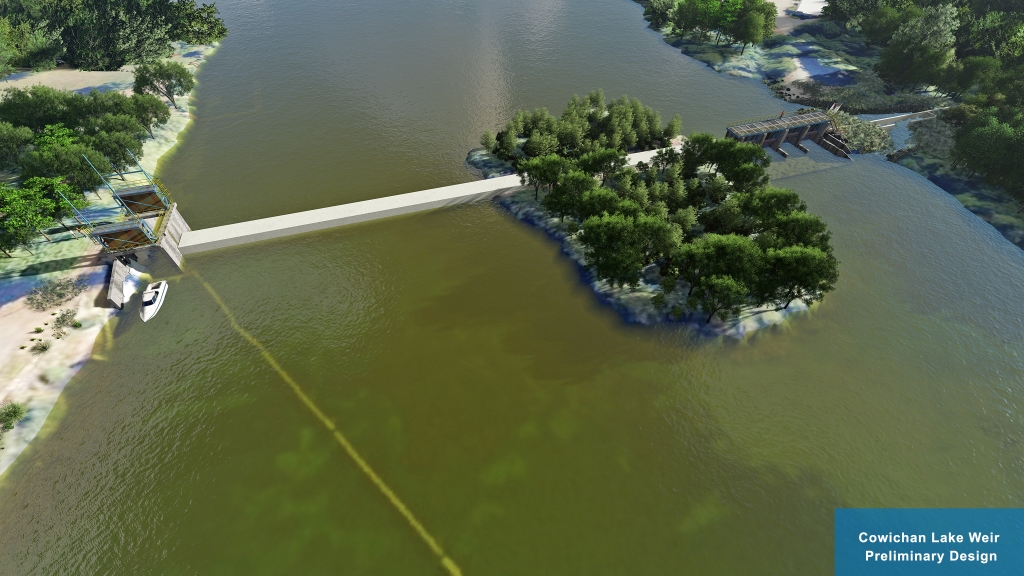
Public safety is a key principle in our design process. We will ensure this continues through to final design. Currently there is a continuous log boom that directs boating traffic away from the weir structure and into the boat lock area.
This is a weir and a dam. When the water flows uncontrolled over the weir, it operates as a weir (typically the winter months) and it operates as a dam when the water level is controlled through the 4 control gates (typically spring to late fall). Regardless of what it is called, it is governed by the same BC Dam Safety design regulations.