It Keeps the Cowichan River Flowing during the Dry Season!
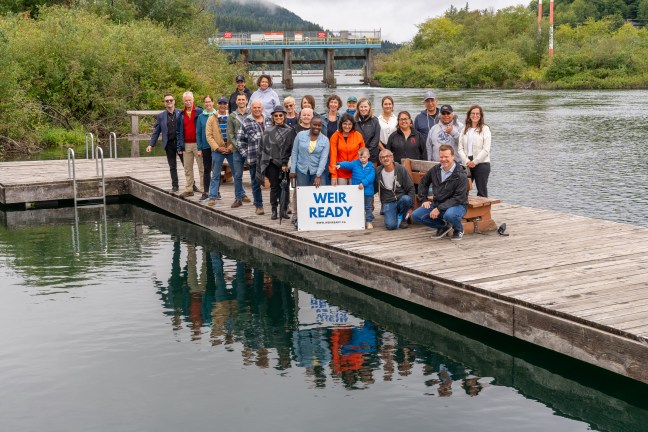
The Cowichan Lake weir is a type of dam used to store water. It is a critical piece of watershed infrastructure that stretches across Cowichan Lake where it empties into Cowichan River. (Shown in the photo at left, taken from the dock at Saywell Park.)
The current weir was built in 1957 by the owner of the downstream Crofton pulp mill to control the outflow of lake water into the river. It is operated under a Provincial water license which requires the operator (currently Domtar-Crofton) to manage water storage and flows according to a seasonal flow schedule (called a rule curve). These flow rates are based on ecological requirements for fish and other species, and tracked with Water Survey of Canada gauges.

For about half of the year, during higher water, the spill gates and boat lock are opened fully. The dam portion is often submerged. During this time, the weir is considered “off-control”, meaning it is not controlling water levels.
During the other half of the year (the dry season from spring to fall), the weir is “on control”, meaning that it is being used to store water, and control the rate of water outflow from the lake to the river. During this time, the boat lock is closed except to allow boats to pass. The spill gates are partially closed, restricting water flows to meet the schedule set by the Province, as a requirement of the water license.

During the weeks when the weir is ‘on control’, the weir owner/manager (Domtar-Crofton mill) posts weekly updates of lake levels and river flow rates with comparisons to other significant years. This information guides decisions about weir management. Click below for this week’s chart. The black line represents the current situation.
Why is this Needed?

Today, climate change is dramatically affecting the health of the Cowichan watershed, which had already been impacted by decades of land use including forestry, road and rail construction, urban development, and biodiversity impacts both in the watershed and in the ocean.
Over the past 20 years, the ability to sustain minimum recommended flow levels has been an annual challenge, and often not possible. The current weir no longer stores enough water in drought years, which are becoming more frequent. During drought, the river becomes shallow and warm, creating conditions that are unsafe for swimming, deadly to salmon and other species, and detrimental to industry due to water use curtailments.
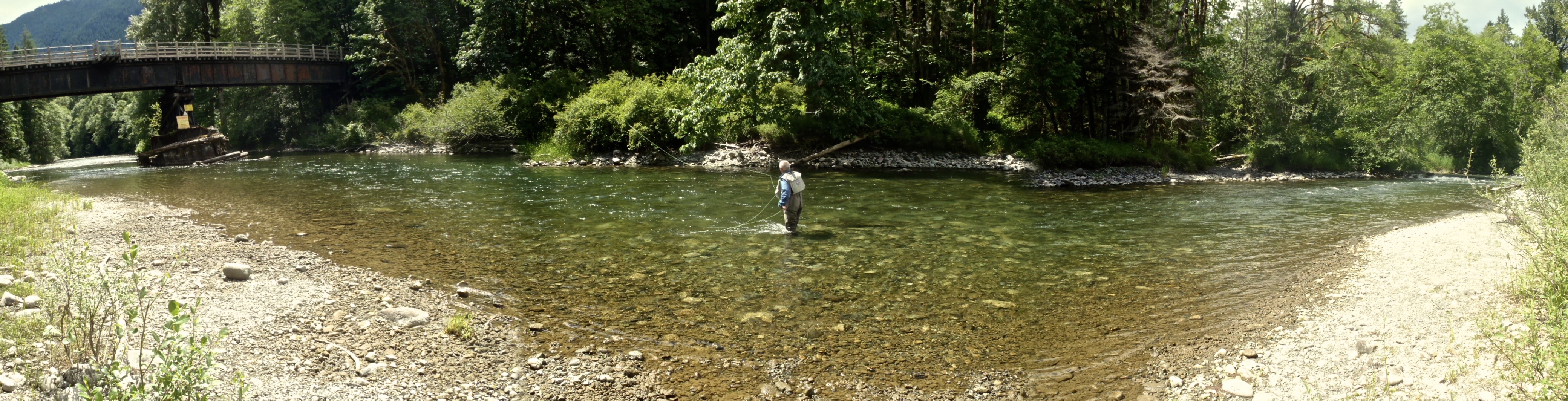
Twice, pumps have been needed to sustain river flows (shown below) after the lake water storage is depleted.
In July 2023, over 84,000 juvenile steelhead, and thousands of other fish, perished due to poor water quality, caused in part by low flows.
This is why the weir needs to be upgraded, with additional water storage to meet environmental needs. The design of the proposed new weir is very similar to that of the existing weir, and it will similarly be operated in accordance with a Provincial water license. The key differences are its height (the dam will be 70cm or 2’4” taller) and additional fishways. Read more about the new weir design below.

How is the Proposed New Weir Better?

The new weir, with an additional 70 centimeter of height, would allow more water to be stored in the lake. This additional water storage would support the river, and all that rely upon it, under our “new normal” weather patterns. Minimum flows could be supported throughout the summer and thereby retain the health of this cherished Heritage River.
- 70 additional cm will provide approximately 2 additional months of healthy flow at the minimum recommended flow rates of 7 cubic meters per second.
- An updated, modern design and technology would meet todays dam and earthquake codes. The new weir would last for many decades and help secure a healthy river environment.
- The new weir will have three fishways instead of one. The existing weir has one small concrete fishway. Fish can struggle to pass up or down through the existing fish way for a number of reasons such as flow velocity, time of year and the type of fish that wish to use it. In other words they struggle to go up or down as they need to. The new weir will has developed two additional features to help all fish go either direction at any time of year.
- The new design incorporates the ability to add a cold water siphon from deeper in the lake in the future, to further improve water quality if needed.
- The new weir has the capability to add an over-the-weir walkway connecting the north and south shore, providing great views, walks, educational opportunities and helps to connect community.
After 70 years, it’s simply time to replace this infrastructure to support the health of the watershed for generations to come.




Current Status
Exploration of options to keep the Cowichan River flowing has been underway for well over a decade. Cowichan Tribes, Cowichan Valley Regional District (CVRD), local industry (Domtar Crofton), other municipal governments, all major watershed NGOs, academics, and others, are collaborating to keep this infrastructure modernization project moving forward. Significant support and financial contributions have been committed by the federal and provincial governments.
Planning and Design. In 2018 a provincially-funded, community-based Water Use Planning (WUP) process concluded with a broad consensus to replace the weir to enhance storage capacity. Then in 2020-2022, the partners worked under the leadership of the Regional District to complete the weir design, and upstream impact modelling, including publishing an online Shoreline Assessment Property View Tool. Learn about all this work here.
The next step will be the submission of a water license application. Cowichan Tribes, CVRD, Cowichan Watershed Board, Domtar, and provincial representatives are actively cooperating in a working group to resolve outstanding questions before proceeding with that step. The license is required to be approved before weir construction could begin. More information will be available on this website at that time.
